The News That Changed Everything — And How It Crossed an Ocean
The popular story of the American Declaration of Independence goes like this: On 4 July, 1776, fifty six men met in Philadelphia and signed a document that became the Declaration of Independence, a document that dissolved the political bonds between thirteen American colonies and the British Crown. That’s what America celebrated a couple of days ago.
But there was no internet, mobile phones or even telex machines back then…so at what point did the British, who ruled those thirteen colonies, find out? How was the message conveyed, who carried it, when did it arrive on British soil, when did the king find out, what was his reaction, how did the British press respond? So many questions. The answers to all these questions reveals a side of Eighteenth century Britain that most readers will never have considered. Let’s go!
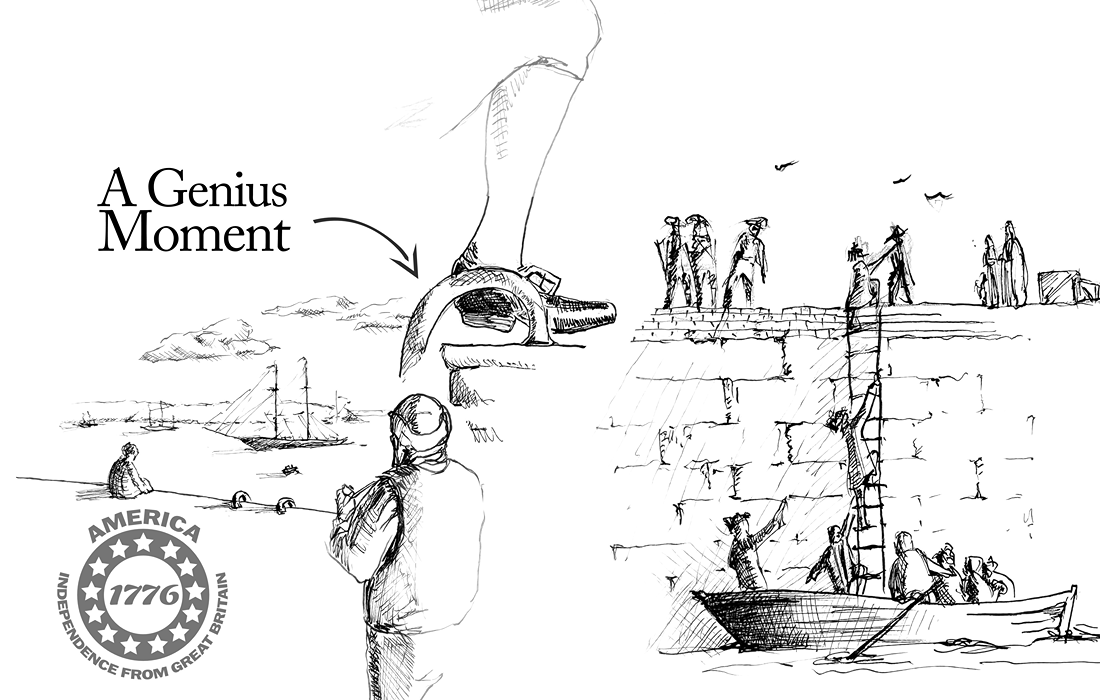
Is this how the Declaration reached Britain?
Let’s look at the timeline of the signing so we know what message exactly was conveyed to Britain. You might imagine that 56 men signed the declaration on 4 July 1776 and then someone took a copy (written out in a calligraphic hand, with all the signatures – the kind we’ve seen in movies) and sent it on the next London-bound boat out of Philadelphia, to be delivered to King George III a month or so later. The real story is quite different.
The Declaration: The REAL story of the document
First of all, the vote for independence was taken by members of the Second Continental Congress (that is representatives of all 13 colonies) on 2 July 1776, not the 4th. So arguably, American independence from Britain began on 2 July, not 4 July. The vote wasn’t unanimous: twelve colonies voted in favour, but New York abstained (it gave its vote ‘for’ on 9 July). What DID happen on 4 July, was that Congress approved the final wording of the declaration. That’s the wording we know today.
Next, on the 19 July Congress ordered what’s known as the ‘engrossed’ version of the Declaration (that’s the version on parchment with the calligraphic handwriting) which was ready by the end of July and signed on 2 August. This version was never shown to the public, but accompanied the Congress as it travelled about the 13 colonies, avoiding capture by the British. Remember, in 1776, the colonies and the British were STILL at war, which only ended (officially) in 1783 with the Treaty of Paris.
Sharing the Declaration with the American public
The American public, citizens of the 13 colonies, first learned of the declaration on the night of 4 July, with the publication of the Dunlap Broadsides – handmade paper posters (approximately 38x48cm in size) printed on a single side with the full text of the approved declaration. These were printed in Philadelphia by John Dunlap and then distributed by riders throughout the colonies, for reading aloud in public meetings and posting to noticeboards. That’s how the news of independence was first announced in America. (Days later, George Washington had the Declaration read aloud to his troops in New York.)
The Dunlap broadsides didn’t carry the 56 signatures. Only two names appear on these sheets: John Hancock, president of the Continental Congress and secretary Charles Thomson. Of course, John Dunlap’s name appears. He’s the printer. So, the Dunlap broadsides were making their way round the colonies on the night of 4 July and into 5 July and beyond, but there was the Atlantic ocean to cross before the news could reach Britain.
Next: News of the Declaration arrives in Britain
There are two competing claims to documents being the first to ‘touch down in Britain’ with the news of Declaration. Two senior British commanders, both at Staten Island, just south of modern Manhattan Island — one aboard a warship in the anchorage, one ashore with his troops — each writing independently to their respective superiors in London, their letters then collected and carried together on the Mercury packet ship as it departed for Falmouth in Cornwall, Great Britain.
General Howe’s letter to Lord Germain
General William Howe (46), commander of British land forces in America, sent an intercepted copy of the Dunlap Broadside along with a letter (dated 7-8 July) to Lord George Germain, Secretary of State for America, back in London. The Mercury packet carried across the Atlantic to Falmouth and then on 10 August, the London Gazette — the official government publication, the closest thing to a verified news source in the eighteenth century — broke the story to the public. The UK National Archives catalogue system holds the Colonial Office papers where Howe’s broadside resides, but it doesn’t appear to be on show this year.
Vice-Admiral Shuldham’s letter to the Earl of Sandwich
Vice-Admiral Molyneux Shuldham (58-ish) was the outgoing Commander-in-Chief of the Royal Navy’s North American Station. He was replaced by Howe’s brother Admiral Lord Richard Howe. Perhaps Shuldham’s last act of command was to send a letter with the news of the Declaration to the Earl of Sandwich, the First Lord of Admiralty. Shuldham was aboard HMS Chatham, Staten Island and his letter is dated 10 July 1776. You can see Shuldham’s letter at the Royal Museums Greenwhich.
Doubt over dates – timeline inconsistencies
How did Shuldham’s letter, dated 10 July, find its way on to a ship that sailed on 9 July? Something’s up. Researchers have been unable to settle this. He may simply have put the wrong date. But that’s unlikely for a military man.
How did Howe and Shuldham’s letters reach London?
They travelled by ship. We know from the British shipping newspaper, Lloyd’s List, that the Mercury packet ship departed New York on 9 July 1776. That’s one piece of solid evidence we have. But there’s no record of when the ship arrived in Falmouth. We sort of reverse engineer that it must have arrived around about the 7-9 of August, leaving enough time to get the correspondence from Falmouth to London, a distance of 280 miles.
The Falmouth packet service
Let’s start with Britain’s packet ship service. These were the arteries of the growing British empire — the official, scheduled mail service of the British state, carrying government despatches, diplomatic correspondence, and private letters to and from the colonies, the Mediterranean, and the Americas. The ships made their home not in London, not in Portsmouth, but in a small Cornish town at the far southwestern tip of England. Falmouth is the most westerly deep-water port in Britain and gave ships quick and easy access to the vast spaces of the Atlantic.
Eighteenth century Britain’s swift and brave packet ships
The packet ships were fast, lightly armed sailing vessels — they relied on speed rather than firepower for their security. Speed was everything. The service originally ran from Falmouth to Corunna in Spain, but by 1705 there was a regular service to the West Indies and the Americas. By the time of the American war, Falmouth packets were crossing the Atlantic on a regular schedule, carrying mail in both directions and making the town an Imperial information hub, second only to London for news.
Sailing past Falmouth and on into the English Channel, east to round the point of Kent and then west up the Thames estuary to London is a long slog and means tacking against contrary winds past coast of France – the great enemy of the Eighteenth century. French privateers from Brest and Cherbourg were a real threat to all British shipping.
In August 1776, when the news of American independence was making its way toward a British public that didn’t yet know it, Falmouth was the place where the Atlantic ended and England began — the first landfall for the most consequential letters of the century.
Horse riders carried the mail from Falmouth to London
Once Howe and Shuldham’s mail arrived at Falmouth it didn’t sit around Custom House Quay waiting to be collected. Mail from the empire was dispatched at top speed to London. A network of express riders and, later, coaches moved it rapidly up the Great Western Road toward London, a journey of 280 miles that could be accomplished in around two days by fast horse relay. The word “express” in the eighteenth century meant something close to what it does now: priority, speed, urgency. Government despatches from Falmouth reached Whitehall and the Admiralty in St James’s faster than ships could reach the Thames.
How exciting to imagine a network of young men in the service of the state galloping their horses from one 20 mile stage to the next – passing through towns and villages such as Bodmin, Launceston, Exeter, Salisbury and many others, handing on their secure mail bag to the next boy, then return at a canter to their original stage to rest and feed the horse, ready for the next relay. That way the mail’s journey was continuous. We’ll never know the name of the person that carried Howe and Shuldham’s mail. And it’s possible the two travelled in the same bag.
The content of the despatches from Howe and Shuldham
Vice-Admiral Shuldham wrote in his letter (and sadly we don’t have a date on which it was read) that the Declaration was:
“…perhaps the first authentick confirmation of what has been so long suspected, the establishment of independence in America.”
From General Howe’s letter and Dunlap Broadside was taken this notice, that appeared in the London Gazette on 10 August. Here we have the first evidence of the announcement of the Declaration to the Britain public:
“I am informed that the Continental Congress have declared the United Colonies free and independent States.”
You can see there was no reasoning behind these announcements, not the rhetoric or philosophical principles of natural rights, just the bare fact: they had done it.
The full text of the Declaration published in Britain
Readers who wanted to know what the Declaration actually said had to wait another week. On 16 August 1776 — nearly six weeks after the signing in Philadelphia — two London newspapers, The Public Advertiser and Lloyd’s Evening Post and British Chronicle, published the full text of the Declaration of Independence for the first time. The London Chronicle followed a day later, with its issue dated 15–17 August carrying the complete document.
Now, for the first time, British readers could read Jefferson’s words for themselves: the self-evident truths, the complaints about King George III and his forfeiture of a right to govern the colonies.
What did London make of the content of the Declaration
The intellectual and political response is a subject in itself. But think on the physical object: a political pamphlet, printed in Philadelphia six weeks earlier, now set in type in London printing houses and read over breakfast or in coffee houses by people who had, until that August, believed the rebellion might still be contained. These same newspapers packed aboard stagecoaches spreading out from London, back to the west country, to Wales, east and to the midlands, the north and Scotland. Imagine how exciting to be a part of the network that carried these papers hurtling around the nation.
And consider, this document was a largely a complaint against King George III. There was no censorship of this news. Anyone who could read would have been able to see it for themselves. Even pro-Government papers and journals carried the full text of the Declaration. The Crown judged the population needed to encounter the document directly, however uncomfortable its arguments.
The Belfast Myth — A Scoop That Wasn’t
A story has circulated — repeated in recent years as “the greatest newspaper scoop of all time” — that the first British printing of the Declaration of Independence appeared not in London but in Belfast, in the Belfast News-Letter, after a ship was blown off course and made an unexpected landfall in Ireland. It is a good story. It is also not true.
The Belfast News-Letter did print the Declaration, in its issue of 27 August 1776. But two London newspapers had already carried the full text on 16 August, and the London Chronicle had it the following day. By the time the Belfast paper went to press, the Declaration had been in print in London for eleven days.
King George III’s copy of the Declaration
History does not record the precise moment George read the Declaration or his response. His government’s formal response accused the Americans of an “extravagant and inadmissible claim of independency” — language that was measured compared to some of the private correspondence circulating in Whitehall. What the King made of Jefferson’s argument that he had personally “repeated injuries and usurpations” against the colonists, all tending toward “absolute despotism,” is not captured in any remark that has come down to us.
Conclusion
The Declaration of Independence changed the shape of the world. It reached the people who needed to answer for it by the same unglamorous route as any other letter that summer — packet ship to Falmouth, then saddle and relay to London. Empires end, it turns out, on the same timetable as the regular mail.

Leave a Reply