Eighteenth Century British Prime Minister No.14
William Petty, 2nd Earl of Shelburne
Prime Minister: 1782-1783 (266 days)
Political faction: Whig
[Life: 2 May, 1737 – 7 May, 1805]
Click to read Overview of ‘PMs on the Pan‘
‘PM on the Pan’ Take Aways
- Disliked and Distrusted: Shelburne was intelligent, able, wise and had great political knowledge, says Hearnshaw: “But he was detached from both the great parties [Whigs and Tories]…and he had shown himself so independent in his opinions and so incalculable in his actions that he had earned the incurable dislike and distrust of all the managers of the machines.” This is part of the reason he turned in his resignation in 1783. Hearnshaw also tells us Shelburne had the nickname ‘Malagrida’, after a Portuguese Jesuit conspirator. (lol, Hearnshaw never disappoints!)
- Fourteenth British Prime Minister. His administration was the third shortest of the Eighteenth century (266 days), beaten by his successor, Duke of Devonshire (226 days), and the shortest of all, albeit by his death, the Marquess of Rockingham (96 days).
- Anglo-Irishman: Shelburne was born in Dublin, his original name was William Petty and his family was part of the landed, wealthy English-Irish Protestants.
- War service: He served in the British army during the American and German campaigns of the Seven Years War (1756-1763). And he did so with distinction.
- Famous acquaintances: Shelburne was related to Seventeenth century English economist Sir William Petty. He developed his own interest in economics and became an advocate of free trade. He was a friend of Scottish economist Adam Smith, Scottish philosopher David Hume and American Benjamin Franklin.
- How he became PM: King George III invited Shelburne to become Prime Minister after Rockingham died suddenly on 1 July 1782. It was either him or Charles James Fox – who George hated. When Shelburne signed up, Fox, and other resigned – not wanting to work under Shelburne who was widely disliked and distrusted.
- In power: In his administration he really only achieved two key things:
- He oversaw negotiations with the Americans in which their independence was conceded.
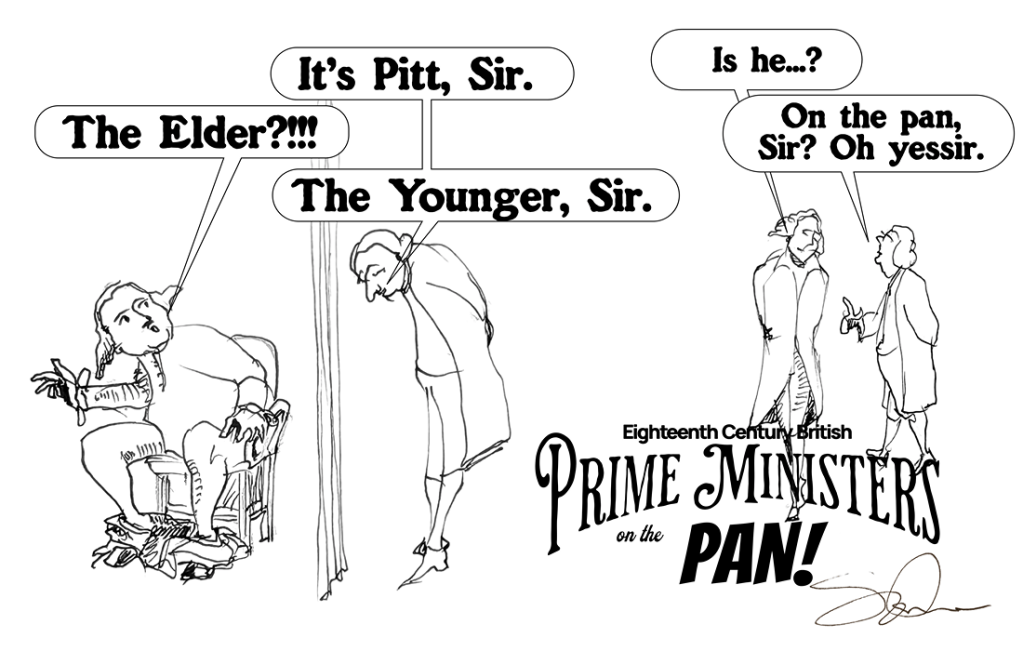
- He brought in, as Chancellor of the Exchequer, the 23-year-old William Pitt the Younger. (This may be his greatest legacy.)
- How he left the PM office: Of the eight month duration of Shelburne’s post-Rockingham administration, five of them were in recess and for only three of them was Parliament in session. When MPs were back in the House his inability to pull together support was obvious and he resigned. Enter the Duke of Portland.
Check out my PMs on the Pan series of posts
1. First PM Sir Robert Walpole
2. Second PM Spencer Compton, 1st Earl of Wilmington
3. Third PM Henry Pelham
4. Fourth PM Thomas Pelham-Holles, 1st Duke of Newcastle
5. Fifth PM William Cavendish, 4th Duke of Devonshire
6. Sixth PM Thomas Pelham-Holles, 1st Duke of Newcastle
7. Seventh PM John Stuart, 3rd Earl of Bute
8. Eighth PM George Grenville
9. Ninth PM Charles Watson-Wentworth, 2nd Marquess of Rockingham
10. Tenth PM William Pitt the Elder, 1st Earl of Chatham
11. Eleventh PM Augustus Henry FitzRoy, 3rd Duke of Grafton
12. Twelfth PM Lord North
13. Thirteenth PM Charles Watson-Wentworth, 2nd Marquess of Rockingham
14. Fourteenth PM Earl of Shelburne
15. Fifteenth PM Duke of Portland
16. Sixteenth PM William Pitt the Younger
Notes
The Prime Ministers, Iain Dale (2020) (Shelburne article by Nigel Aston)
UK Govt Past Prime Ministers: Shelburne
British Prime Ministers of the 18th Century, FJC Hearnshaw (1928)
History of Parliament – Shelburne
 Genius Fan
Eighteenth century fans: Leave your comments here