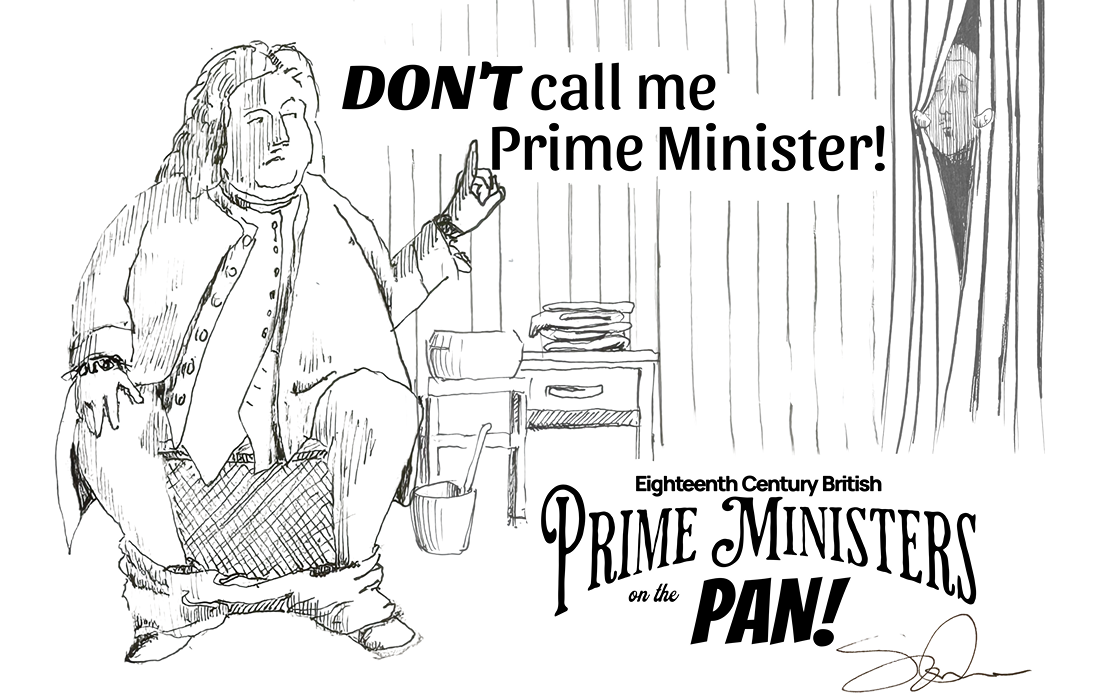
Quick Facts
- Sir Robert Walpole: Prime Minister No.1
- Life: 26 August, 1676 – 18 March, 1745
- Administration: 3 April, 1721 – 11 February, 1742
- Age in office: 44-65 years old
- Duration of administration: 20 years and 315 days
- Political faction: Whig
- Predecessor: Charles Spencer, Earl of Sunderland
- Successor: Earl of Wilmington
Click to read Overview of ‘PMs on the Pan‘
The Bare Essentials: Sir Robert Walpole
- Britain’s first ever Prime Minister: Back in the Eighteenth century being called Prime Minister was a slur and in 1741, Walpole is reported to have declared: “I unequivocally deny that I am sole and prime minister.” The title Prime Minister did not officially exist until well into the Nineteenth century. On 3 April 1721, Britain’s King George I announced Walpole was First Lord of the Treasury and Chancellor of the Exchequer. These two roles are closely connected (see the UK Government website). Walpole has been nominated the first prime minister because of technical differences with his predecessor, Charles Spencer, Earl of Sunderland, who was First Lord of the Treasury (NOT prime minister) from 1718-1721.
- How he got the top job: Appointed First Lord of the Treasury and Chancellor of the Exchequer by George I on 3 April 1721, taking over after Charles Spencer, the Earl of Sunderland, resigned. Walpole’s calm handling of the South Sea Bubble crash made him the King’s obvious choice.
- Surfed the South Sea Bubble of 1720: Walpole profited by buying shares in the South Sea Company and selling before the bubble ‘burst’, commonly referred to as the world’s first financial crash. He then successfully managed the aftermath, in which many notable and wealthy families lost huge amounts of money (Isaac Newton lost millions of pounds – in today’s money), to the satisfaction of many thereby solidifying his position and power for the next two decades.
- Robinocracy: This was the term used for Walpole’s administration (after his first name, Robert).
- Master of munificence: Walpole was supreme at creating support, largely by handing out positions in the government, military, universities, church and so on. This contributed to his political longevity.
- How he left office: Forced to resign on 11 February 1742, after a narrow 1741 election result and a lost vote of confidence over a disputed election petition. Accepted the earldom of Orford on his way out.
- Longest serving British Prime Minister: Twenty years and 315 days was the length of his premiership. That’s the longest of any prime minister.
Sources for information about Sir Robert Walpole
The Prime Ministers, Iain Dale (2020) (Walpole article by Mark Fox)
The Impossible Office, Anthony Seldon (2021)
Historic-UK.com (South Sea Bubble)
Wikipedia: Sir Robert Walpole
Leave a Reply