Category: PMs on the Pan
-
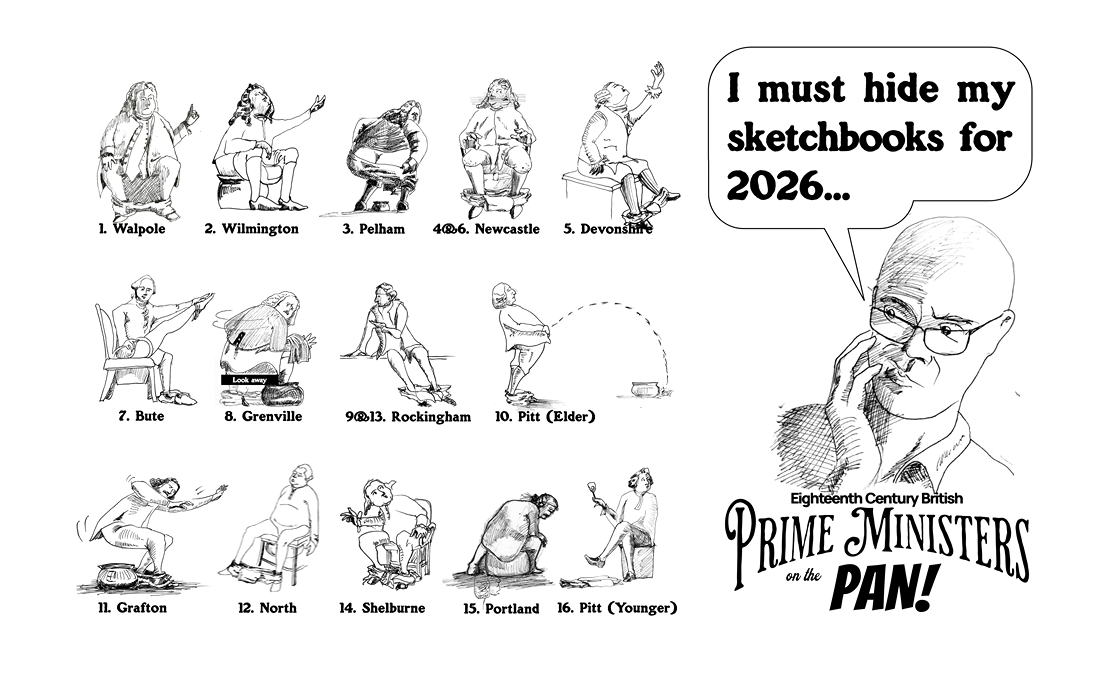
Flashbacks After Months Sketching Eighteenth Century Prime Ministers on the Toilet
It finally came to an end: the Prime Ministers on the Pan series of blog posts on Genius Fan. I sketched 14 different men sitting on or hovering over a pot, pan or commode. (Fourteen men over 16 administrations.) That’s gonna leave a mark. Let me tell you about it.…
-

William Pitt the Younger – 18th Century British Prime Minister (1783–1801) | PMs on the Pan
The last of Britain’s eighteenth century Prime Ministers. At 24 he was the youngest PM ever, one of Parliament’s greatest orators, founded the first Australian penal colonies, and oversaw the establishment of the United Kingdom. There’s a reason he closes out this series.
-
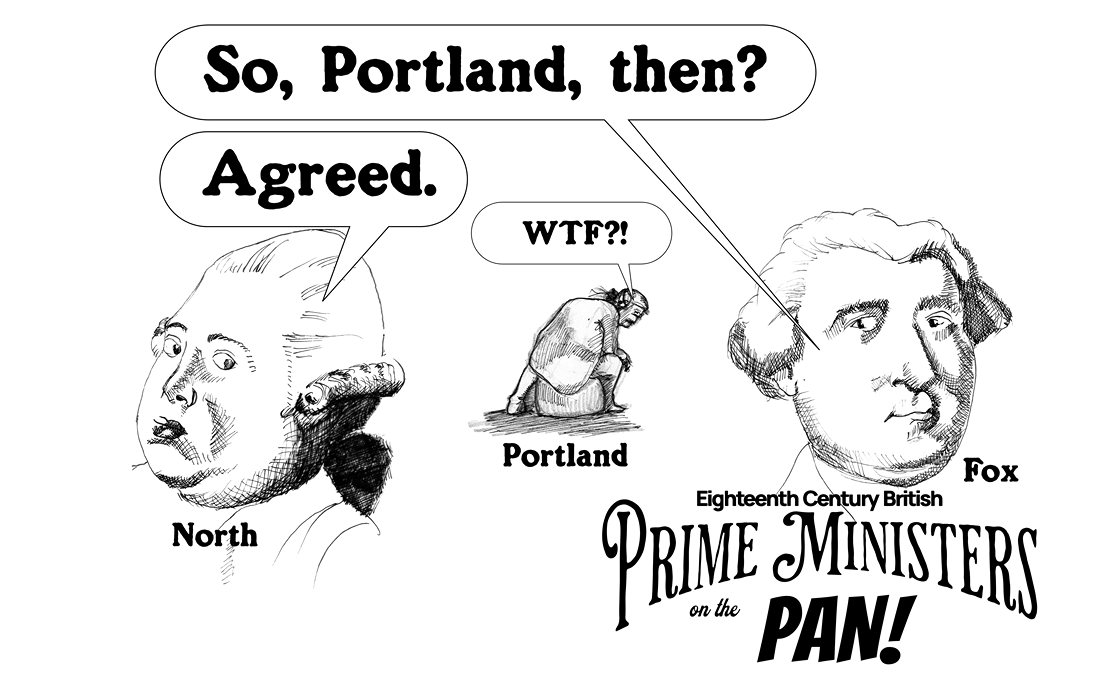
Duke of Portland – 18th Century British Prime Minister (1783) | PMs on the Pan
May have been called Prime Minister, but think of him as PM in name only. Behind him were two big beasts and formerly bitter rivals: Radical Whig and Foreign Secretary Charles James Fox, and Tory Home Secretary Lord Frederick North. The figurehead premiership, explained.
-

Earl of Shelburne – 18th Century British Prime Minister (1782–1783) | PMs on the Pan
Intelligent, able, wise, and with great political knowledge — but so detached from both the Whigs and Tories that he’d earned the incurable dislike and distrust of everyone important. His nickname was ‘Malagrida’, after a notorious Portuguese Jesuit conspirator. Not exactly a promising start.
-

Marquess of Rockingham (Second Term) – 18th Century British Prime Minister (1782) | PMs on the Pan
A second-time PM, and his was the thirteenth prime ministerial administration of eighteenth century Britain. Unlucky for some — and for him, since he died in office. He was horse-mad, and had the cash to indulge it.
-

Lord North – 18th Century British Prime Minister (1770–1782) | PMs on the Pan
Britain’s twelfth Prime Minister was a nice guy, but weak in the face of opposition — especially the King and stronger personalities. His tactic? Pretend to sleep. He’s blamed for losing the American colonies, but could anyone else have avoided it?
-

Duke of Grafton – 18th Century British Prime Minister (1768–1770) | PMs on the Pan
Took over as Prime Minister in 1768 from William Pitt the Elder, for whom he’d been First Lord of the Treasury. A year and a bit later, after a poor showing on the American colonies, he was finished off by a relentless campaign from the mysterious Letters of Junius.
-
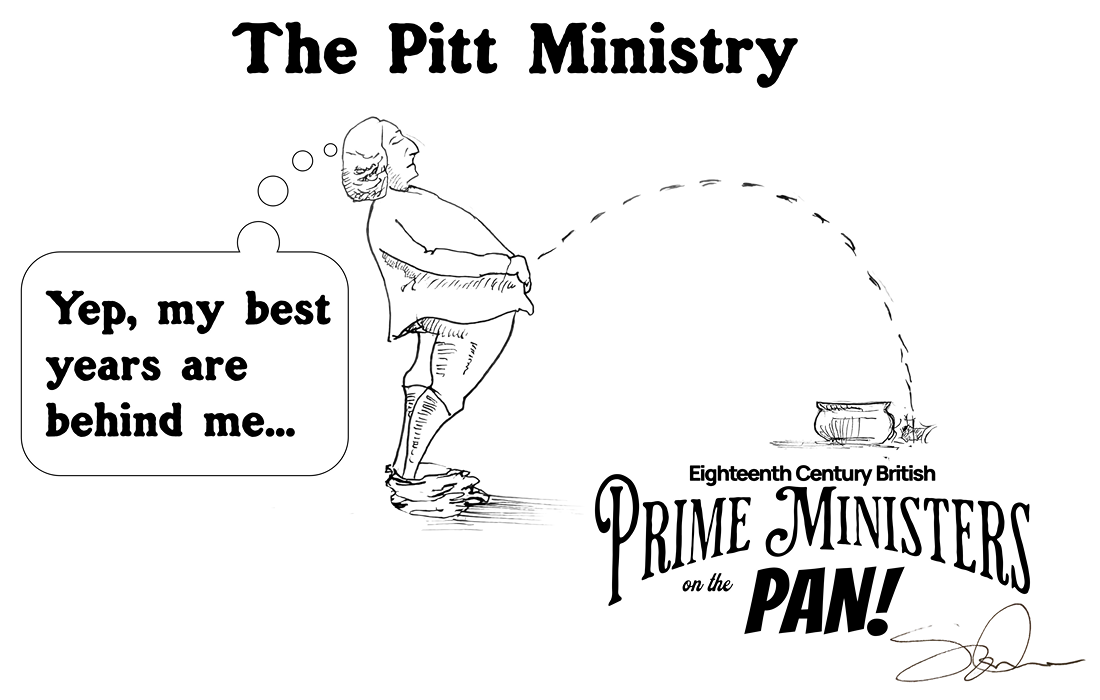
William Pitt the Elder – 18th Century British Prime Minister (1766–1768) | PMs on the Pan
A great Parliamentarian, but not such a good Prime Minister. A formidable war leader and orator in the Commons, and father of the even more famous William Pitt the Younger — office suited him rather less than the floor of Parliament did.
-

Marquess of Rockingham (First Term) – 18th Century British Prime Minister (1765–1766) | PMs on the Pan
Britain’s ninth Prime Minister made an historic contribution to politics during his term — Britain became the first nation in the world to develop this system, evolved alongside his friend, the Irishman and philosopher Edmund Burke. His real legacy isn’t what you’d expect.
-
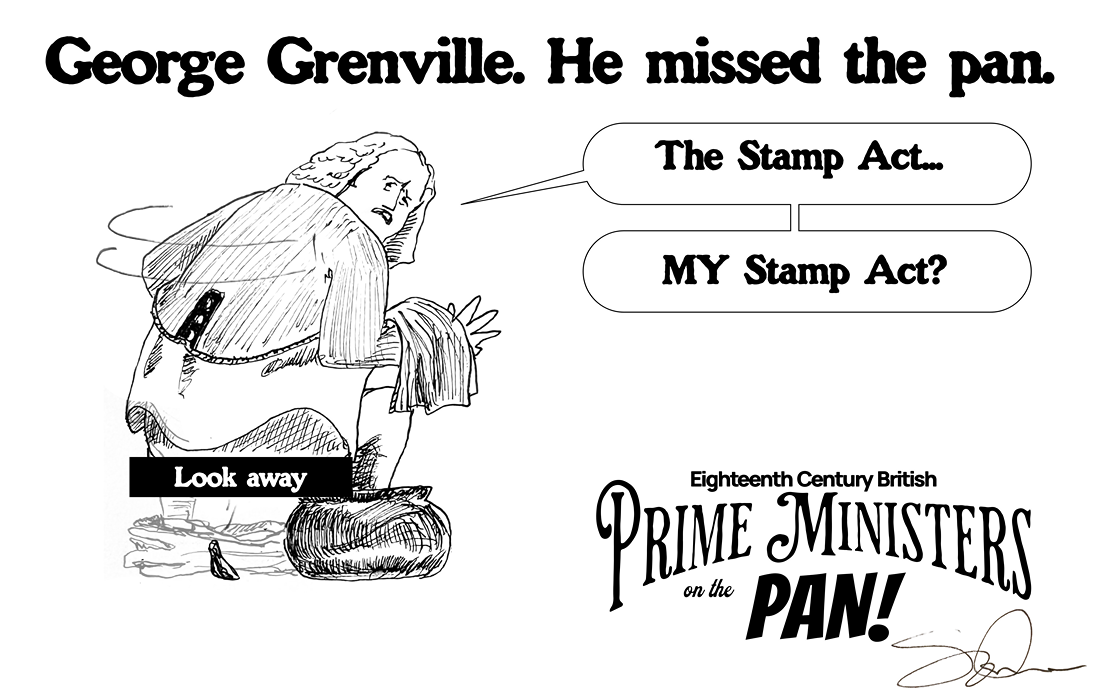
George Grenville – 18th Century British Prime Minister (1763–1765) | PMs on the Pan
Remembered as the man who introduced the Stamp Act to the American colonies, setting in train the events that led to independence. From a hugely political family in Buckinghamshire, William Pitt was his brother-in-law, and he prosecuted the ‘folk hero’ John Wilkes. A consequential and combative figure.
-

Earl of Bute – 18th Century British Prime Minister (1762–1763) | PMs on the Pan
He may only have been in office for 318 days, but just about everybody hated Britain’s 7th Prime Minister — Scotsman, Tory, and the most unpopular man in the room. Here’s why he never stood a chance.
-

Duke of Newcastle (Second Term) – 18th Century British Prime Minister (1757–1762) | PMs on the Pan
Britain’s 4th and 6th Prime Minister returned to the top job in 1757, and just two years later, alongside William Pitt the Elder, engineered the 1759 ‘annus mirabilis’ — the run of victories that launched Britain’s global supremacy. His second act was his best one.
-

Duke of Devonshire – 18th Century British Prime Minister (1756–1757) | PMs on the Pan
Britain’s fifth Prime Minister, in office from 1756 to 1757, owned the gigantic stately home Chatsworth House — the one used as Darcy’s Pemberley in the 2005 film Pride and Prejudice. A short premiership, a very large house.
-

Duke of Newcastle (First Term) – 18th Century British Prime Minister (1754–1756) | PMs on the Pan
Britain’s 4th Prime Minister, The 1st Duke of Newcastle, followed his brother into the top job, but had to resign after just 2 years after the navy lost the strategic Mediterranean island of Menorca to the French. His nickname was Hubble Bubble. I dare you to click and read more…
-
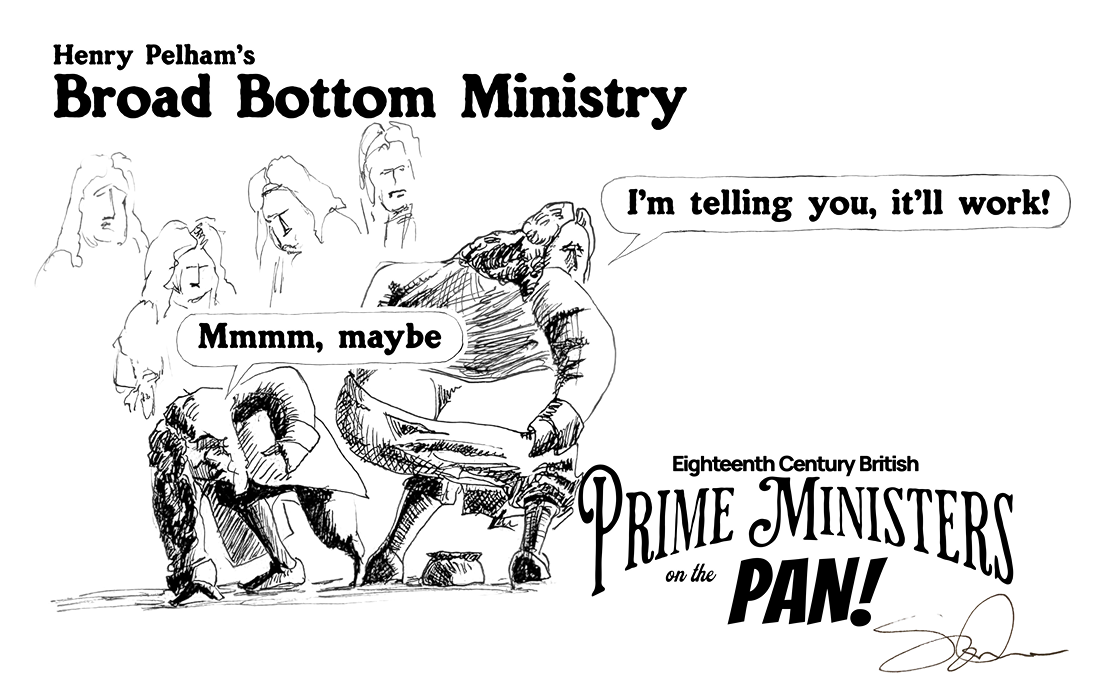
Henry Pelham – 18th Century British Prime Minister (1743–1754) | PMs on the Pan
Britain’s 3rd Prime Minister, in office from 1743-1754, formed the Broad Bottom Ministry by bringing some Tories into his Whig-led administration. This forced George II to give up his preference for the powerful John Carteret, handing him control. Steadier than his predecessors, and it shows.